
NAD Therapy: Why NAD is Becoming One of The Most Talked About Treatments in Wellness
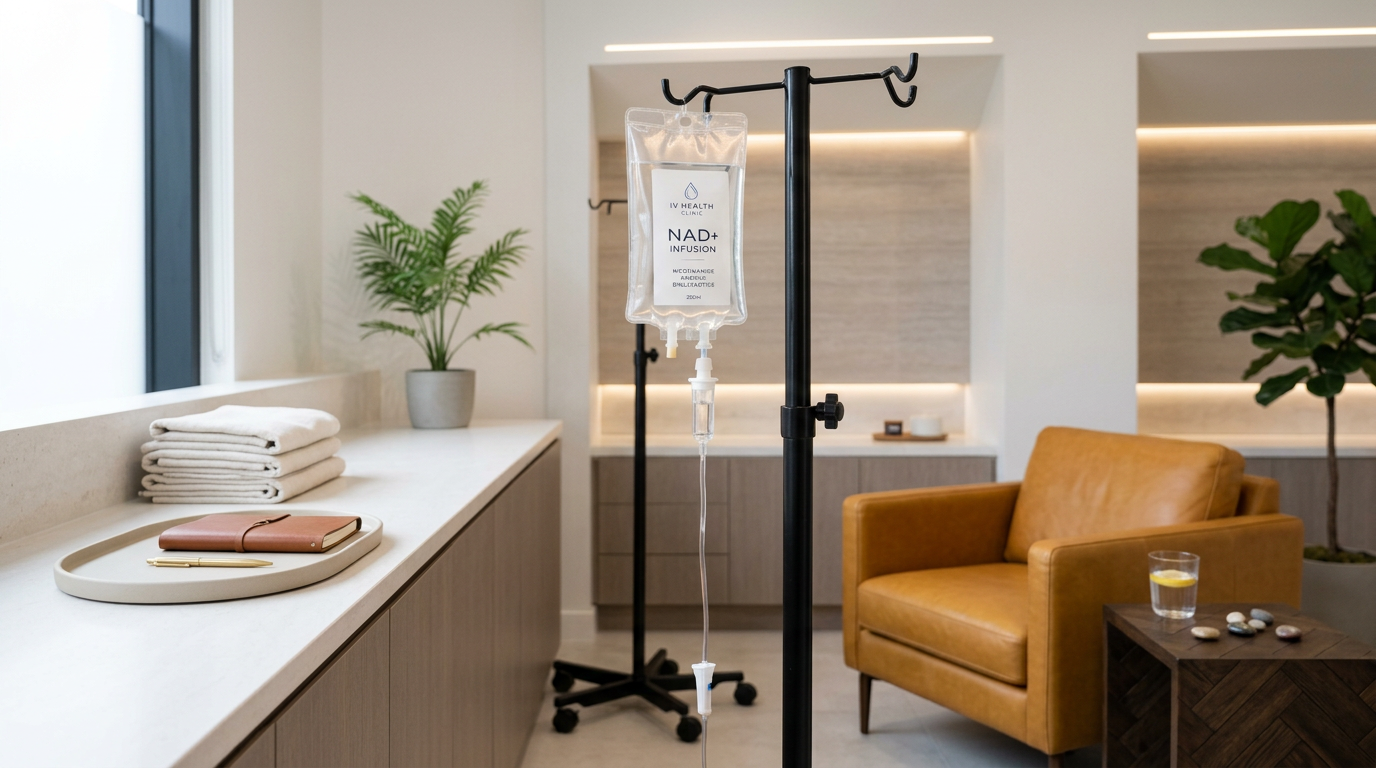
There was a time when NAD was something most people had never heard of…
Today, it’s one of the most talked about treatments in the world of longevity, energy, recovery and proactive wellness.
From Hollywood to professional sport, entrepreneurs to high-performing professionals, NAD therapy has moved rapidly from specialist longevity clinics into the mainstream. Celebrities including Jennifer Aniston, Hailey Bieber, Kendall Jenner and Gwyneth Paltrow have all been publicly associated with NAD or NAD related wellness treatments, helping to propel it into the spotlight.
But behind the celebrity interest is something considerably more interesting.
NAD is not simply another wellness trend. It is a naturally occurring coenzyme found in every cell of the body and is fundamental to the way our cells produce energy and function.
Increasingly, researchers are exploring how supporting NAD metabolism could influence energy, cellular health, healthy ageing, recovery and even our body's internal clock.
So, What Exactly is NAD?
NAD stands for Nicotinamide Adenine Dinucleotide.
It is a coenzyme involved in hundreds of cellular processes and plays an essential role in converting nutrients into usable cellular energy.
Its role extends well beyond energy production. NAD is involved in:
Cellular energy production
Mitochondrial function
DNA repair and cellular maintenance
Cellular signalling
Metabolic processes
Healthy ageing pathways
In simple terms, NAD helps cells do what they are designed to do.
This is why NAD has become such an exciting area of modern longevity and wellness research. Rather than being a stimulant that artificially pushes the body harder, NAD is part of the body's own underlying cellular machinery. Due to it not being available in the typical diet, intravenous (IV) NAD drips have become popular as a way of delivering NAD related compounds directly in to the body, ensuring 100% bioavailability.
NAD and Energy: Supporting the Body at a Cellular Level
Every cell requires energy to function, and mitochondria play a central role in producing it. NAD is an essential component of the biochemical reactions involved in this process.
This has obvious relevance to modern lifestyles.
Long working hours. Intense training. Travel. Stress. Poor sleep. Busy schedules. And simply getting older. All place demands on the body's energy systems.
Supporting healthy NAD metabolism is therefore becoming increasingly attractive to people interested in maintaining energy, resilience and performance as part of a broader approach to wellbeing.
Rather than thinking about NAD as an instant energy “hit”, it can be viewed as supporting one of the fundamental processes through which the body produces energy at a cellular level.
NAD and Healthy Ageing
One of the reasons NAD has attracted so much attention is its connection with the biology of ageing.
Research has increasingly explored how NAD metabolism changes with age and how this may interact with mitochondrial function, cellular repair and metabolic health.
Animal research has produced particularly interesting findings, while human studies are helping researchers understand how NAD related interventions translate into real world health outcomes.
Recent reviews have highlighted NAD pathways as an important and promising area of longevity research, while also emphasising the need for further studies to establish optimal approaches, doses and treatment schedules.
The science is continuing to develop rapidly, with growing interest in how NAD metabolism might be supported to promote healthier cellular function throughout life.
The research isn't standing still. It is moving rapidly.
NAD and Mental Clarity
Another reason NAD therapy has become popular is its relationship with neurological function.
The brain is one of the body's most energy demanding organs, and healthy mitochondrial function is fundamental to normal cognitive performance.
Researchers are increasingly exploring the role NAD metabolism may play in brain health, cellular energy and neurological function. it has become an interesting area for those looking to support mental clarity, focus and cognitive wellbeing.
For many people, the goal isn't simply to have more energy - it's to feel mentally sharper, clearer and more switched on.
NAD and Women in Midlife: Supporting the Body Through Change
For many women, the years around menopause can feel like a period of significant change.
Energy levels may fluctuate. Sleep can become more disrupted. Concentration can feel different. And that familiar sense of “brain fog” - struggling to find the right word, losing your train of thought or simply not feeling as mentally sharp as you once did - is something many women describe during this stage of life.
This is where IV NAD has started to attract interest.
NAD plays an important role in cellular energy production, mitochondrial function and processes involved in maintaining healthy cells. As we age, the body's cellular environment changes, leading researchers to explore whether supporting NAD metabolism could form part of a broader approach to healthy ageing.
Could NAD Support Brain Fog and Energy?
Brain fog is one of the commonly discussed experiences associated with the menopause transition.
While it can have many causes - including hormonal changes, disrupted sleep, stress and fatigue - the brain's demand for energy remains constant.
NAD is involved in the cellular processes that help generate that energy, as well as pathways involved in neuronal health and cellular maintenance.
This has prompted growing scientific interest in the relationship between NAD metabolism, brain function and ageing.
NAD shouldn't be viewed as a replacement for appropriate menopause care or as a treatment for menopause itself. Instead, it represents an emerging area of research into cellular energy, cognitive wellbeing and healthy ageing.
For women thinking more proactively about their health during midlife, NAD infusions can form part of a wider conversation about supporting the body as it changes.
The goal isn't about trying to turn back the clock. It's about supporting the body, understanding its changing needs and continuing to feel like yourself - energised, clear-minded and ready for what's next.
NAD and Jet Lag
For frequent flyers, business travelers and people regularly crossing multiple time zones, this is one of the most interesting potential applications of an NAD drip and an exciting area of research.
Jet lag occurs when your internal circadian clock becomes temporarily misaligned with the local time at your destination.
That mismatch can affect:
Sleep and wakefulness
Energy levels
Mental clarity
Concentration
Mood
Appetite and digestion
Overall sense of wellbeing
Your circadian rhythm helps regulate when you feel awake and alert and when your body prepares for sleep. It also influences processes including metabolism, hormone signaling and cellular activity. NAD is closely connected to this system and has therefore generated significant interest in its potential role in helping the body adapt to changes in routine and time zone.
There is some clinical evidence supporting an association between NAD related compounds and jet lag. An earlier double-blind, placebo-controlled study found that oral NADH was associated with reduced sleepiness and improved performance on several cognitive measures following a three-hour time-zone shift.
More broadly, research into NAD and circadian biology has shown that NAD metabolism interacts with the molecular machinery responsible for maintaining our daily biological rhythms.
This is why NAD infusions have become particularly interesting within travel wellness and recovery.
Why Are the Stars Turning to NAD?
There is no question that NAD has become popular with celebrities.
High-profile names including Jennifer Aniston, Hailey Bieber and Kendall Jenner have all been publicly associated with NAD related treatments, while NAD has also become increasingly visible within the wider celebrity wellness and longevity space.
People who live highly demanding lifestyles - whether that's travelling constantly, working long hours, training intensively or managing significant professional commitments - are increasingly interested in ways of supporting their energy, recovery and overall wellbeing.
NAD has become part of that conversation.
But its appeal goes beyond celebrity culture.
The reason NAD has captured the attention of scientists is its fundamental role in human biology.
The celebrities may have helped make NAD famous. The science is what makes it interesting.
Why Clinical Oversight Matters
As NAD drips become more popular, choosing an experienced clinical provider becomes increasingly important.
NAD therapy involves intravenous administration and should therefore be approached as a clinical treatment rather than simply another wellness experience.
A responsible approach should include:
Individual medical assessment
Suitability screening
Review of relevant medical history
Appropriate treatment planning
Clinically trained administration
Monitoring throughout treatment
Clear aftercare advice
The aim isn't simply to administer NAD. It's to understand the individual, their lifestyle, their goals and whether an intravenous NAD infusion is appropriate for them.
Final Thoughts
NAD therapy sits at a fascinating intersection between modern clinical wellness, cellular biology and longevity science.
Its popularity among celebrities has helped bring NAD into the mainstream, but the scientific interest runs much deeper.
NAD is fundamental to the way our cells produce energy, maintain cellular processes and interact with the body's internal biological clock.
The relationship between NAD and the circadian rhythm is particularly exciting - especially for people who travel frequently, experience disrupted routines or regularly cross time zones.
For women navigating midlife and menopause, NAD is also becoming an interesting part of the wider conversation around cellular energy, cognitive wellbeing and healthy ageing.
For now, NAD should be viewed as an emerging and increasingly sophisticated area of wellness and longevity research, rather than a miracle solution.
But the direction of travel is clear.
NAD is becoming one of the most fascinating conversations in modern wellness - and it is a conversation that is only just beginning.
At IV Health Clinic, our approach is always clinically led, individualised and focused on responsible treatment. For those interested in exploring whether IV NAD may be appropriate for them, treatment should begin with a professional assessment rather than a one-size-fits-all approach.
The stars may have put NAD in the spotlight. Science is now helping us understand why it deserves our attention.
